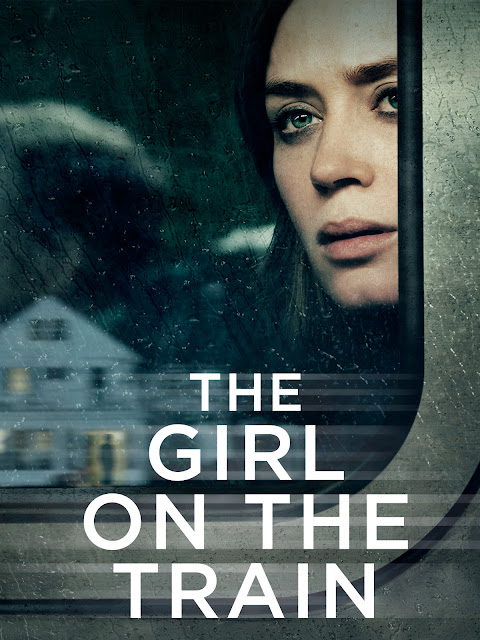
The Girl on the Train - Movie Review


When you start watching The Girl on the Train, you’ll probably feel the same as you did if you read the book: a bit confused. The first scenes can be difficult to follow, but it all gets better as the story develops.

I thought that not being perfect, captured the right feeling for this story. 

A good actress can save a mediocre movie

Emily Blunt is Rachel, the main character, and I must say: she is great. The main trace of this character is the almost permanent confusion, mentally speaking. Emily was able to portray it perfectly. 

In fact, if it weren’t for her performance, the film wouldn’t be very interesting. It has a pace that is too slow, and we have the perspective of a person who is confused and almost permanently drunk. It would be boring. So congratulations, she did a great job.

You can’t ignore the differences

It is an almost universal truth that movies are never as good as books. They always miss something, and The Girl on the Train wasn’t different.

The first thing that bothered me was that they changed the location. The original story is set in London, but the film is in New York. Yet, she keeps the British accent. Why? I mean, I don’t care about the accent, but why the change?

Then, there is her personality and the way she acts. As I said before, Emily perfectly represented the mental confusion of an alcoholic. Yet, it seems a different character from the book. She is more clingy in the book, while she seems more secure and proactive even in the movie. Perhaps because a film has a faster pace than a book, it lacks a lot of her suffering and frustration. We're talking about someone who lost what she thought was a perfect life.

Can alcohol really rebuild your memories?

Since I read the book, I have been questioning myself. We all heard stories of people who don’t remember things or remember them slightly different from what happened. But scientifically, how hard can alcohol interfere with your memory? It is something to think about.

Considering the movie itself, you should not raise your expectations about it. The film adaptation is never as good as the book, right? 

In the end, I would say I liked it. It is a bit slow and confusing at first, but it gets better. 

Comments

Popular posts from this blog

Can Monsters Love?Fred and Rose West: A British Horror Story

  Netflix's Fred and Rose West: A British Horror Story is not just a true crime documentary — it’s a psychological deep dive into one of the most disturbing couples in British criminal history .  While the crimes are shocking, the nature of Fred and Rose’s relationship truly unsettles. Were they in love? Or was their bond something far darker? A Match Made in Hell From the moment Fred and Rose met, something clicked. But it wasn’t a love story — it was a dangerous connection built on control, abuse, and mutual cruelty.  The documentary shows us how they fed off each other’s darkest urges. It wasn’t about love in the traditional sense. It was about power, domination, and shared depravity. Can Psychopaths Feel Love? This is the big question. Can two people with such extreme psychological disorders really feel love? Some experts believe psychopaths can feel attachment, but not empathy — they might need someone, but not care for them in the way most of us understand....

Raising Voices - Why Alma's Mom Had the Right Reaction

  In Netflix’s Raising Voices , there's a raw, emotionally charged moment when Alma confesses to her mom that something happened the night she disappeared — she was drunk, she had sex, and something didn’t feel right. It’s the kind of moment that many parents dread. But Alma’s mom handled it in a way that deserves attention. She didn’t panic. She didn’t judge. She didn’t lose control. Instead, she met her daughter halfway, which made all the difference. What Happened in the Scene? When Alma opened up to her mom, she wasn’t just confessing — she was testing the waters for safety. Could she trust her mom with the truth? Would she still be loved after saying something shameful, scary, or confusing? Her mom’s response wasn’t perfect — but it was real. She was concerned, but didn’t explode. She asked questions. She listened. She let the moment breathe. Why That Reaction Matters Technically, what Alma described can be considered sexual assault , given her level of intoxication. Bu...

Adolescence: A Mirror We Can’t Look Away From

  How Can a 13-Year-Old Commit Murder? What was once an absurd, unthinkable question is the central premise of Adolescence , Netflix ’s latest British drama.  From the first episode, the show grips you with its raw portrayal of youth violence. It pushes us to confront an unsettling reality—children, barely teenagers, are capable of unimaginable acts. But Adolescence does not sensationalize crime; rather, it dissects it , laying bare the complex web of factors that lead to such a moment. It’s Not About the Victim Unlike many crime dramas, Adolescence does not dwell on the victim. Instead, it forces us to ask: Who is the perpetrator? Who is his family? Who are his friends? What kind of environment produces a child capable of killing?  The show wrestles with these haunting questions, exposing the uncomfortable truth that the killer does not come from an easily identifiable “dangerous” background. His family is normal—too normal. This leads us to the most disturbing though...